Information For Authors
Invitation
Papers that reflect knowledge innovation within the purview of enquiry of the journal, viz. business management; information and other modern technologies; and education, training, and development against the backdrop of the evolving socio-cultural and ethical vicissitudes with a focus on prosperity and sustainability, are called for publication in the NIBM Journal of Knowledge Innovation.
The submissions (papers, hereafter called manuscripts) shall include conceptual articles (theoretical enquiries), research articles (empirical studies of alternative research approaches), review papers, case studies (organization or sector based), technical project reports (tried out in organizations), and book reviews.
Review and Acceptance Process
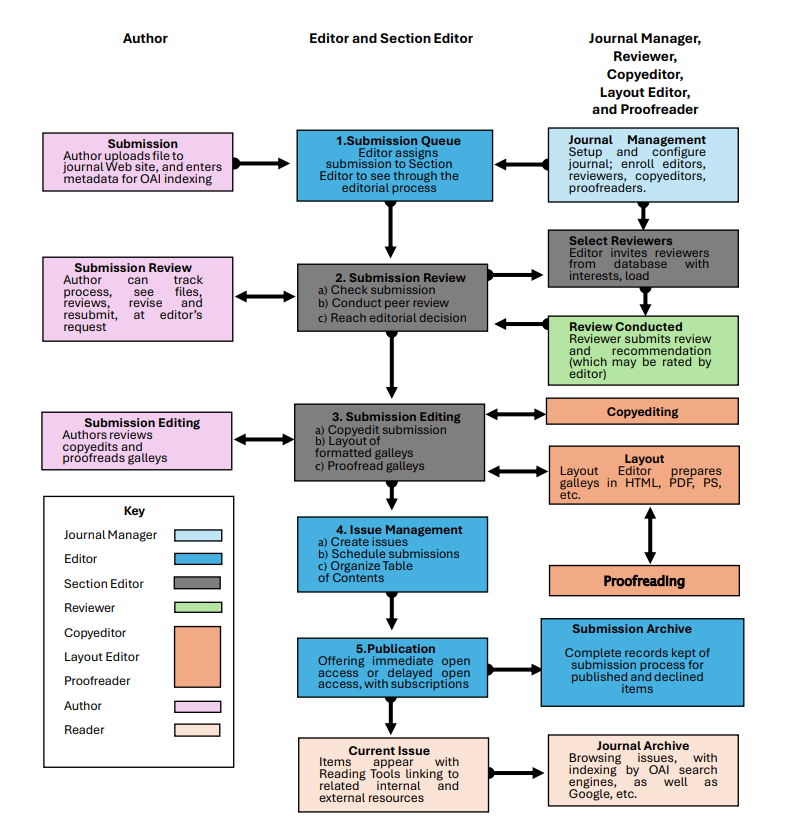
Each submission will initially be reviewed by the Editorial Board and thereafter submitted to two subject experts for blind reviewing. The comments and suggestions received will be conveyed to the authors with requests for revision before the paper is accepted for publication. A submission may even be rejected based on the reviewers’ comments which will be duly informed to the contributor. The editorial board or the reviewers may request for data and workings during the review process which the authors must be willing to provide.
Editorial Requirements
Length and Composition
The word count of a manuscript is from 5,000 to 10,000 words. It includes the Abstract, Keywords, Text, Notes, Tables and Figures, References, and Appendices. However, a book review will be from 1,200 to 1,500 words. While the contributor is free to select the headings and sub-headings of the paper it will naturally include an introduction, the body, and a conclusion.
Font-size and Page Set-up
Use A4 page setting; 12 point Times New Roman font; 1” margins; 1.5 spacing; page numbers centered on the bottom margin; and text justified
Major Sections and Components
Title Page
The title page (first page) of the paper shall include: the title; the name (s), qualifications (academic and professional-in abbreviated form); current designations of author (s); postal address(es), and phone numbers and e-mail address(es).
The title: Bold type; upper case; single spaced if extending for a second line; centered across the top of the first page in 14-point Times New Roman font. Other details shall appear below the title in 12-point Times New Roman font, single spaced.
In the case of multiple authors, the corresponding author shall be marked with an asterisk. Please note that the authors’ names shall not appear anywhere else in the document other than on the title page and the reference list (if any).
Abstract and Key Words
The second page shall include a one-paragraph abstract of not more than 150 words, followed by 4-5 key words. The abstract shall include, in brief, the objectives of the article, methods adopted, salient findings and conclusions.
Each key word will commence with the upper case.
Text
The text shall begin on the third page and will consist of logically organized sections. Commonly used section-headings include Introduction/ Background of the study, review of literature, research design, context, methodology, results and interpretation, discussion, and conclusions. Supplementary/ additional information may be given as endnotes (and not footnotes). References and Appendices (in that order) will follow with page numbers continuing.
Headings
Three levels of headings shall be used.
Level 1: Flushed left; 14 point Times New Roman font in bold type; first letter of words (other than propositions, conjunctions and articles) given in the upper case.
Level 2: Flushed left; 12 point Times New Roman font in bold type and italicized; first letter of words (as above) given in the upper case.
Level 3: Indented; 12 point Times New Roman font italicized; first letter of words (as above) given in the upper case.
Avoid numbering of paragraphs.
Tables
Tables shall conform to the following:
Contain only horizontal lines (no vertical lines); contents shall be in 11 point Times New Roman font; numbered with Arabic numerals consecutively (e.g. Table 1, Table 2); the paragraph preceding the Table to carry the first reference to the Table; heading and source (both left aligned) in 12 point Times New Roman font, with first letter of words given in the upper case.
Figures and Illustrations
Figures and illustrations shall conform to the following:
Numbered with Arabic numerals consecutively (e.g. Figure 1, Figure 2); the paragraph immediately preceding the Figure/ Illustration to carry the first reference; heading and source (both left aligned) in 12 point Times New Roman font, with first letter of words given the in upper case; line drawings shall be presented in blank tone only.
References
Use American Psychological Association (APA) style for both in-text citations and the reference list. References will appear at the end of the text and will be double spaced. URL addresses to references to be given, wherever available. Refer APA REFERENCE STYLE (7 TH EDITION) of the Library University of Moratuwa for a concise guide of the APA style.
Appendices
Numbered with Arabic numerals consecutively (e.g. Appendix 1, Appendix 2); heading left aligned in 12 point, Times New Roman font, with first letter of words given in the upper case.
Acknowledgments
Acknowledgment of financial or any other support can be made through a brief note added at the end of the text and prior to references.
General Comments on Writing
- Use standard written English
- Get the manuscript checked for grammar and spellings accuracy, i.e. copy editing
- Do not use AI beyond copy-editing the document (if at all)
- Maintain a Turnitin originality score of less than 20 percent.
Non-conformance
Any manuscript that does not conform to the above instructions will be returned for required improvements in writing.
Submission of Manuscripts
Submissions can be sent in throughout the year and will be considered for the next immediate issue depending on the length of the review process, Contributors shall make their submissions in MS Word file format to the Managing Editor, NIBM Journal of Knowledge Innovation via the software dedicated for the purpose.
Authors need to register with the journal prior to submitting or, if already registered, can simply log in and begin the five-step process.
OJS Workflow Chart